Cancer is a subject that doesn’t bear thinking about and yet 900,000+ people in the workforce are preoccupied with it. They are living with cancer and 28% of them say they have had little or no support from their employer. (Source Macmillan Cancer Support – The Forgotten C)
What can you do? One of the ways in which employers can be supportive is by pledging to the Greater Manchester Bee Seen, Get Screened campaign agreeing to:
- guarantee their staff paid time off, or provide flexible working, to attend NHS cancer screening appointments
- raise the profile of health and wellbeing in the workplace.
- encourage their staff to talk about cancer and the importance of screening.
195 businesses in Greater Manchester have already signed up to the pledge meaning that over 146,000 employees can confidently request time off and know that they will be supported by their line managers.
Why should employers pledge?
Supporting cancer screening at work shows you care about your people and their wellbeing:
- Helps employees feel valued and supported
- Early detection means kinder treatment and better outcomes
- Can reduce time off work and support staff to stay well
- Shows you are a caring, responsible employer
- A small step that can make a big difference in saving lives
Why is screening so important?
It’s vitally important that if you notice anything that is unusual to you, you go and see your GP as soon as possible. However, where screening comes in is diagnosing and detecting cancer before there are any obvious symptoms, and sometimes before cancer has even had a chance to fully develop.
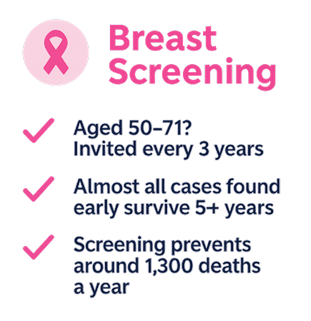
The NHS has three screening programmes breast (mammogram), cervical (smear test) and bowel cancer (home faecal immunochemical testing or FIT kit).
| Breast screening is offered to anyone registered as female with their GP, with invitations sent out between the ages of 50 and 53 and then every three years until age 71. Regular screening helps to detect cancer |
|
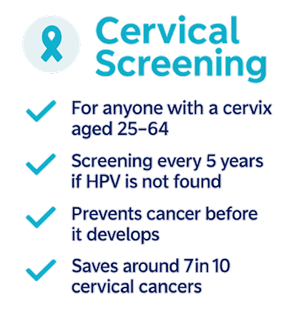 |
Cervical screening is for anyone with a cervix Cervical screening is a reliable and effective way |
|
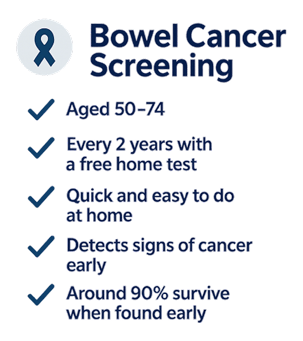
Bowel cancer screening is offered to people Bowel cancer screening helps detect cancer |
|
Why is this especially important in Greater Manchester?
Not enough people in our region are getting screened, and too many suffer unnecessarily. Cancer impacts individuals, families, employers, and communities.
How can I raise awareness?
- Book awareness session with Answer Cancer
- Use alongside other wellbeing interventions
- Include in staff inductions and meetings
- Share online risk checkers
- Display posters
- Use Answer Cancer’s training and quizzes
- Share free videos in community languages
- Include in 1-2-1s
Talking about screening has knock-on effects for other health issues like cholesterol and diabetes, improving workplace health and spreading the message to families and communities.
What happens next?
If you are interested in making the Bee Seen, Get Screened pledge, please scan our QR code, or contact emily.lambert@vsnw.org.uk or info@answercancergm.org.uk to get your questions answered simply sign up here– it takes 2 minutes!!
The Answer Cancer team can support you with a communications pack, sample press release, and staff training on screening—if you’d find this helpful.